
The TL;DR (For the Aggro-Driven Rogue Main)
- The Silicon Payload: Model 01-0033 basically took Otfried Preußler’s legendary 1962 rogue boss, Der Räuber Hotzenplotz (The Robber Hotzenplotz), right out of retro print and loaded him straight onto physical cloud tech. Think of it like porting a classic arcade gem onto a modern console.
- The Serialization Meta: This specific release proved that long-form, multi-part classic children's books could act like seasonal DLC. It drives major collector energy through sequential episodic drops, like the later cardboard moon rocket expansion pack.
- Intricate Physical Assets: Sporting a heavy weapon inventory, this figure raised the bar for what a high-detail plastic toy from a vintage illustrated storybook should look like.
The Quest Log
- The Rogue in Green: Migrating Classical German Literature to the Screen-Free Space
- Side Quest: Custom Tagging and the Legacy Audio Archive
- Physical Breakdown: Dissecting the Visual Sculpt, Weapons, and Iconic Apparel
- Multi-Part Adaptations: Establishing the Serialization Playbook for Vintage Lore
- Sandbox Longevity: How a Classical Thief Cemented Brand Retention
The Rogue in Green: Migrating Classical German Literature to the Screen-Free Space
Pour a giant mug of coffee and let's chat about a real parenting win. Getting a classic literary icon into a modern digital sandbox is exactly like porting an old school arcade classic onto a premium custom emulator. When the platform designers picked Der Räuber Hotzenplotz, they weren't just grabbing a random character. They were running a tactical campaign to win over the real final bosses of the household: the parents and grandparents. Let's face it, we hold the purchasing power, and we grew up turning actual paper pages of Otfried Preußler’s famous books or spinning those retro vinyl records of the old radio plays.
By taking this deep slice of nostalgic storytelling and dropping it onto an interactive audio setup, the brand built a direct bridge from traditional print media straight to offline digital hardware. Instead of letting historical stories collect dust on library shelves or get buried in messy streaming apps filled with ads, the tiny plastic figure acts as a tangible key. This strategy proved that the platform could be a premium archive for deep literary lore, rather than just a quick cash-grab delivery mechanism for short cartoon tie-ins. It immediately boosted the hardware from a simple toy to an essential, culturally rich home library. This keeps legacy stories completely competitive in a scary media environment ruled by glowing tablets and eye-straining television screens that turn our kids into tiny, hyperactive murlocs.
Moving text over to local storage chips means you have to understand how audio files scale. When you click the figure onto the magnetic base, the box doesn't just pull a random file from some messy folder. It fires up a localized playback system built to match the cozy pacing of turning real book pages. This smart setup creates a focused listening bubble that perfectly copies the natural cognitive speed of traditional storytelling. It keeps developing brains safe from the non-stop, hyper-stimulating dopamine loops packed into modern video apps.
Side Quest: Custom Tagging and the Legacy Audio Archive
For my fellow tech geeks, D&D dungeon masters, and homebrew hardware builders out there, trying to clean up archival audio from the mid-twentieth century is a whole raiding party on its own. Those vintage theatrical audio tracks were recorded onto analog magnetic tapes, which gives them a distinct, flat mono sound profile completely different from today's digital surround sound. When engineers try to squeeze those legacy tracks into the strict storage limits of a modern microchip, they have to run some serious equalization sorcery.
The tiny internal mono speakers inside kids' audio players are physically tuned to boost mid-range frequencies so voices stay crystal clear. But if you boost those exact same frequencies on an audio track recorded more than fifty years ago, you end up amplifying a massive amount of historical tape hiss. Hobbyists messing around with custom tagging tools know that while fresh, modern content needs barely any compression, these archival audio tracks must be heavily scrubbed and limited to keep them from hitting nasty digital clipping when the volume is maxed out.
Tweaking these audio levels is a lot like dialing in the structural tension on a custom 3D printer frame or carefully carving the exact depth of a maple bridge on a classical violin. You have to adjust the frequency curve by hand to filter out low-frequency room rumble and high-end analog crustiness without squishing the life out of the original voice actors. Seeing how the system processes these old sound layers shows you the true underlying architecture of the platform, proving that software tuning matters just as much as the cool little toy chilling on the inductive charging base.
Physical Breakdown: Dissecting the Visual Sculpt, Weapons, and Iconic Apparel
The physical build of this particular figure is an incredibly cool piece of injection-molded plastic that completely nails the retro look of the original mid-century book sketches. The durable polymer blend they chose gives it a tough, micro-textured finish that can easily survive endless drops, stray crayons, and heavy everyday toddler chaos.
- Visual Asset Hierarchy
- Headwear Elements
- Tall Pointed Black Hat
- Crimson Fabric Band
- Long Curved Red Feather
- Facial Features
- Deep Black Textured Beard
- Prominent Bulbous Nose
- Torso and Inventory Gear
- Green Long-Sleeved Tunic
- Brown Belt with Dagger Slots
- Right Hand holding a Brown Flintlock Pistol
- Left Hand holding a Golden Curved Sabre
- Lower Body Foundations
- Tattered Black Trousers with Red Knee Patch
- Bare Pink Feet
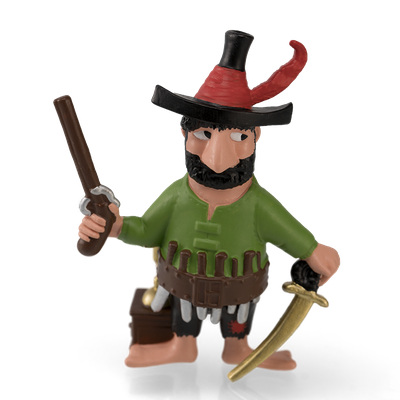
This charming little outlaw stands proudly on bare pink feet that even feature quirky, uneven toe details. He's rocking dark, charcoal-colored trousers that cut off mid-calf with jagged, tattered cuffs to sell that rugged forest-bandit lifestyle. There is a bright red, hand-stitched patch stamped right onto his left knee, giving a neat pop of color to his bottom half. Around his waist is a wide, dark brown utility belt complete with a square center buckle and a neat row of vertical slots holding an entire armory of throwing daggers.
His upper body is styled in a bright green long-sleeved tunic with tiny, subtle button flaps right at the collar. The face sculpt is iconic: he has a massive, bulbous nose that juts way out over a thick, heavily textured black beard covering his jaw and upper lip. His wide, painted eyes are glancing slyly to the side, giving him a fun, mischievous look. On his head sits that legendary, towering black hat featuring a wide upturned brim, a thick crimson band, and a long, sweeping red feather curving back gracefully. His weapon loadout is fully visible: his right hand grips a chunky brown flintlock pepper pistol with silver-painted details on the firing hammer, while his left hand points down, holding a long, curved golden sabre with a detailed black handguard.
Multi-Part Adaptations: Establishing the Serialization Playbook for Vintage Lore
Let’s face it, you can’t pack the chaotic adventures of this famous forest thief into one quick audio file. By bringing an author's entire multi-book saga into the ecosystem, the company laid down a perfect blueprint for making sequential product lines. Honestly, it works exactly like dropping successive expansion modules for a beloved tabletop campaign. The moment a kid finishes the first volume, which is the classic tale where our villain steals Grandma's prized musical coffee mill, they immediately demand the next quest line to find out how Kasperl, Seppel, and the local police deal with the mess.
This serialization style totally reshaped how the brand handles its long-term catalog. The system architecture makes it easy for the company to launch completely separate, unique versions of the same character, such as the legendary sequel where the boys build a homebrew lunar rocket out of cardboard and silver foil, without confusing anyone at retail. Each unique physical figure acts as an intuitive, tactile bookmark for a specific spot in the story's timeline. It showed the entire toy industry that serialized classic books can maintain incredible engagement, turning casual one-off buyers into dedicated collectors tracking a multi-part story arc.
From a factory standpoint, serialization is a brilliant way to cut down on the terrifying costs of mold fabrication. The core injection molds for the main body shapes, arms, and head models can be recycled or slightly tweaked across different production runs. This neat trick lets the factory maintain massive output while easily swapping out paint masks or hand accessories, keeping store shelves fresh without needing to rebuild the heavy mechanical tooling machinery from scratch.
Sandbox Longevity: How a Classical Thief Cemented Brand Retention
Leaning heavily into classic literature turns a messy bedroom toy shelf into a beautifully organized, physical library ecosystem. By anchoring their release schedule to timeless tales, the brand created a fortress of consumer trust and long-term loyalty. Grandparents immediately spot the signature pointed hat, the tattered pants, and that funny pepper pistol from their own childhood memories, which makes them incredibly excited to fund the platform's ecosystem for the grandkids.
For the little listeners, bringing an infamous villain into their bedroom lineup adds some much-needed narrative conflict to their playtime loops. Having a dedicated bad-guy figure on the shelf works just like throwing a major boss monster into a fantasy miniature game, giving kids a perfect physical anchor to stage their own imaginative tabletop campaigns. This brilliant design choice lifted the hardware out of the temporary tech fad bucket and secured its spot as a core piece of household play layout, keeping historical stories alive through screen-free, tactile magic.
The Exit Interview
- Golden Nugget: Adapting multi-book vintage characters proved that physical figures can act as tangible digital bookmarks. This strategy drives amazing long-term family interest across deep, multi-part classic stories.
- Rapid Fire FAQ:
- Who wrote the original story for this character? The character was created by the brilliant German children's author Otfried Preußler and originally published back in 1962.
- What weapons are molded onto this physical figure? He is packing a distinct brown flintlock pepper pistol in his right hand, a curved golden sabre in his left hand, and a handy utility belt loaded with a row of daggers.
- Does this story feature sequels on the platform? You bet! This initial launch created the serialization model, leading straight to more episodic figures like the cardboard lunar rocket adventure.
- Next Step: Go check out your kid's current collection shelf. If it is only filled with standalone, modern movie summaries, grab a classic multi-part literary figure to introduce your crew to a deep, multi-volume world of classic storytelling.
Disclaimer: Our goal is absolute technical accuracy, but we are human and bugs happen in the code. We never intend to offend, insult, or attack anyone with our content. If you spot a bad data point or a broken fact, please report the post so we can patch it immediately. We are just a three-person squad running this site, managing the daily blog, and prepping the new forums. If you appreciate the grind and want to help us keep the lights on, consider buying us a coffee. It keeps our caffeine levels critical and the servers running.
Reference Log
- https://www.ideeundspiel.com/p/tonies-01-0033-der-rauber-hotzenplotz-der-rauber-hotzenplotz/BOXINE01-0033
- https://tonies.com/de-de/tonies/der-raeuber-hotzenplotz/der-raeuber-hotzenplotz-2021/
- https://www.idealo.de/preisvergleich/OffersOfProduct/201104557_-der-raeuber-hotzenplotz-neuer-audioinhalt-tonies.html
- https://www.orellfuessli.ch/shop/home/artikeldetails/A1060120417_