
The TL;DR (For the Miniature Horde)
- The Core Concept: This specific orange dragon release adapted a massive German literary and television intellectual property to solidify the late 2016 ecosystem platform strategy.
- The Audio Matrix: Porting a full television production to a mono 3-Watt speaker requires extreme dynamic range compression to keep spatial voice cues audible without a screen.
- The Catalog Split: Moving from traditional solo-narrated audiobooks to a multi-cast television format allowed the brand to establish an autonomous episodic playground for young listeners.
The Quest Log
- The Dragon Island Migration: How the brand brought a highly successful literary and television franchise into the ecosystem to establish early episodic authority.
- Side Quest: Mastering the TV Mix: Unpacking the structural transition from a wide stereo TV broadcast dynamic to a single mono speaker, analyzing how localized sound design and dialogue cues are mixed so children do not lose track of the action without visual frames.
- The Literary vs. Serialized Battle: A direct technical and narrative contrast highlighting why the multi-cast TV-series adaptations created an autonomous sandbox experience that differed fundamentally from the classic solo-narrator audiobook readings.
The Dragon Island Migration
Grab your coffee, friends, because we need to talk about how a tiny orange dragon essentially became the Charizard of the screen-free audio world back in late 2016. Ingo Siegner's legendary creation, Der kleine Drache Kokosnuss, was already the undisputed king of German bedtime routines long before he got immortalized as a physical plastic figurine. Think about it from a platform launch perspective: when you are a scrappy new hardware startup trying to pull parents away from scratched CDs and ancient cassette players, you cannot just roll up with public domain fairy tales or unproven original characters. You need a heavy hitter. You need a household name that carries instant emotional equity with your target demographic. This little dragon was the perfect bridge to get families hooked on the Tonie ecosystem.
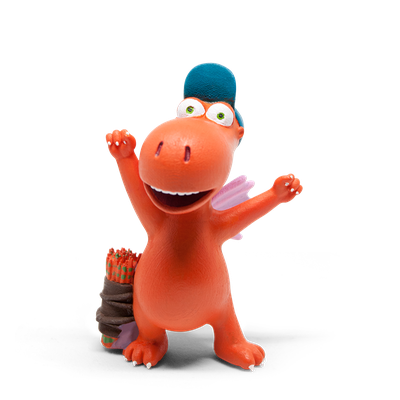
The physical design of this figure is a beautiful 1-to-1 match with the computer-animated television show, complete with his iconic blue cap and a rustic little bundle of sticks. For toddlers, this visual link acts exactly like setting up a high-end miniature tabletop game: the physical piece immediately loads a massive narrative dataset directly into their brains. By leaning on this setup, the manufacturing team solved the ultimate boss fight of product launches: parent buy-in. Spending your hard-earned cash on a brand-new audio system feels like a massive gamble if the content library looks thin or completely alien.
When parents spotted a face they already trusted from years of reading books or catching public TV broadcasts, the risk vanished. The figure instantly became a physical token of safe, repeatable storytelling. On a manufacturing level, molding this little guy was an engineering feat. Those adorable wings are thin and highly flexible because they are made from a rugged thermoplastic elastomer formulation. It is designed to take an absolute beating, resisting fatigue failure even when twisted, dropped, or used as a teething ring by a chaotic toddler. The base has an asymmetrical footprint to keep the center of mass low, ensuring the internal neodymium magnet stays glued to the speaker box even when your miniature horde starts bouncing around the living room.
This specific release proved that the platform could handle modern, licensed television properties right alongside old-school fairy tales. It transformed the device from a simple bedtime jukebox into a full-blown entertainment hub. For serious collectors, it was a signal that the ecosystem was ready to grow up alongside our kids, evolving from simple nursery rhymes into complex, episodic adventures.
Side Quest: Mastering the TV Mix
Taking an audio master built for a high-definition stereo television and squeezing it into a tiny, isolated mono speaker is a brutal technical challenge. In a standard TV mix, sound engineers have a massive stereo sandbox to play in. Dialogue sits comfortably dead center, while atmospheric background sound effects, like the rustling leaves of Dragon Island, ocean waves, or a crackling campfire, get panned far to the left and right channels. This spatial layout keeps the track from turning into a muddy wall of sound. Plus, when a kid watches the actual show, their eyes handle the heavy cognitive lifting: if someone talks off-screen, the visual frame gives immediate context.
When you delete the screen and squash that wide stereo field down into a single 3-Watt mono speaker, the acoustic laws of physics catch up with you. Without heavy digital wizardry, the background music and ambient island noises will slam directly into the dialogue, completely drowning out the narrator and characters. To save the story from acoustic crowding, engineers have to apply massive dynamic range compression and surgically target mid-range equalization. The human ear is biologically wired to focus on vocal frequencies between 1 kHz and 4 kHz, so the mastering engineers aggressively carve out a pristine clearing in this exact spectrum to make sure every word cuts through the noise.
The transformation pipeline follows a strict signal-processing sequence:
- Original Stereo TV Master Input
- Extraction of the multichannel spatial audio layout.
- Identification of critical dialogue tracks versus peripheral environmental sound elements.
- Mono Downmix and Phase Alignment
- Collapse of left and right channels into a unified mono signal summing block.
- Phase-correction filtering to prevent cancellation of overlapping vocal frequencies.
- Dynamic Range Compression and Parametric Equalization
- Application of hard limiting to prevent loud television action sequences from clipping the low-power hardware amplifier.
- Target amplification of the mid-range frequency band to maximize vocal intelligibility.
- Integration of side-chain compression to automatically lower ambient island noise whenever a character speaks.
- Acoustic Translation Optimization
- Artificially boosting the amplitude of kinetic sound cues, including footfalls, map rustles, and gear handling, to compensate for the missing television animation frames.
- Delivery of the finalized low-bitrate digital audio payload tailored exactly to the acoustic properties of the fabric-wrapped wooden cube speaker.
By utilizing side-chain compression, the ambient island noises are dynamically ducked out of the way. Every single time a character opens their mouth to speak, the volume of the background environment automatically dips in real time so the dialogue stays crystal clear. On top of that, the sound design has to compensate for the total lack of visual animation frames. If a character runs across a shaky bridge or unrolls an old treasure map, the Foley effects, like footsteps or paper crinkles, must be subtly exaggerated in the mix. The audio file becomes a beautifully tuned script where spatial arrangements are traded for tonal clarity and hyper-distinct vocal profiles. The voice actors deliver incredibly clean, articulated performances, ensuring that every single character remains instantly recognizable through a tiny, fabric-covered cube.
The Literary vs. Serialized Battle
The real magic of choosing between a traditional audiobook and a serialized television audio play comes down to how your child manages their attention span. Classic audiobooks feature a single narrator reading the text, changing their pitch slightly to tackle different roles. It requires a lot of heavy lifting from a child's abstract cognitive processing. The listener has to build the entire map internally, visualizing every environment and action based solely on prose. For a toddler, that can feel like running a high-level Dungeons and Dragons campaign without a grid map or miniatures. It is incredible for bedtime routines, acting as a slow, rhythmic wind-down that gently lowers sensory stimulation to prep the brain for sleep.
The television audio play format on this Tonie runs on a completely different engine. It is snappy, fast-paced, and driven by a multi-cast ensemble with a continuous orchestral score. There is no omniscient narrator explaining that a character is startled or running for their life: instead, your kid hears an audible gasp, followed immediately by rapid footsteps and a dramatic swell in the music. This style mimics the exact energy and pacing of modern animation, turning the audio into a self-contained acoustic ecosystem. It allows kids to dive into active physical play, like building block castles or coloring, because the high-energy sound design keeps them hooked without requiring undivided eye contact.
Architectural Breakdown: Traditional Audiobook vs. Serialized TV Play
- Vocal Delivery Mechanics
- Traditional Literary Audiobook: Features a single narrator performing variable character voices to maintain a steady, uniform narrative flow.
- Serialized TV Audio Play: Employs a full multi-cast ensemble with distinct voice actors providing realistic, fast-paced interactions.
- Acoustic Environment Dynamics
- Traditional Literary Audiobook: Contains minimal to non-existent background sound effects to focus consumer attention entirely on the spoken text.
- Serialized TV Audio Play: Built with continuous environmental soundscapes and active orchestral scoring to mimic television dynamics.
- Narrative Engine Operation
- Traditional Literary Audiobook: Relies heavily on descriptive prose explaining character actions, scene transitions, and internal thoughts.
- Serialized TV Audio Play: Driven entirely by action-oriented dialogue, audible gasps, kinetic movement sounds, and real-time audio cues.
- Cognitive Demand Profiles
- Traditional Literary Audiobook: Requires high abstract visualization from the child to mentally construct the surrounding environment from scratch.
- Serialized TV Audio Play: Utilizes high auditory pattern recognition, providing instant contextual clues without needing visual frames.
- Primary Use Case Alignments
- Traditional Literary Audiobook: Perfectly suited for bedtime relaxation, sleep preparation routines, and focused, stationary listening.
- Serialized TV Audio Play: Engineered for active daytime play, block building, drawing sessions, and interactive social scenarios.
By introducing these serialized television episodes into the physical toy realm, the brand cracked the code for continuous library expansion. Instead of one long story that hits a definitive 'Game Over' screen, the episodic layout serves up multiple distinct adventures in a beautifully familiar setting. It turns the plastic figure into a gateway for an open-world sandbox universe. Kids do not just sit passively and listen: they integrate the toy right into their imaginative play spaces, using the dragon as a live actor while the audio fills the room with atmosphere. This dual-mode interaction is exactly why the platform moved away from being a mere CD player replacement and became an interactive audio playground that fits perfectly into the beautiful, erratic chaos of early childhood.
The Exit Interview
- Golden Nugget: Serialized multi-cast audio play figures create a highly engaging, autonomous play environment by adapting complex television sound design into optimized, mono-compatible vocal tracks.
- Rapid Fire FAQ:
- How does this release handle the lack of a television screen for context? The audio mix utilizes aggressive mid-range equalization and side-chain compression to ensure dialogue remains perfectly clear over the background sound effects and musical score.
- What makes the physical figure durable during active play? The manufacturing process uses high-grade thermoplastic elastomer for flexible components like the wings, combined with an asymmetrical structural design that centers the weight over the internal magnetic base.
- Next Step: Audit your collection to see if you have a healthy mix of slow, single-narrator audiobooks for winding down and high-energy multi-cast episodic figures for active play sessions.
Disclaimer: Our goal is absolute technical accuracy, but we are human and bugs happen in the code. We never intend to offend, insult, or attack anyone with our content. If you spot a bad data point or a broken fact, please report the post so we can patch it immediately. We are just a three-person squad running this site, managing the daily blog, and prepping the new forums. If you appreciate the grind and want to help us keep the lights on, consider buying us a coffee. It keeps our caffeine levels critical and the servers running.
Reference Log
- Official Tonies Product Page for Der kleine Drache Kokosnuss
- Heise Price Comparison and Specifications for Tonies Kokosnuss 01
- Toniebox Speaker Hardware Support Documentation